By Terence Law
The hardest problems in the studio are rarely technical. They are almost always human. Across my recent block of sessions I've spent long days in the tracking room with a wide range of artists, and the through-line has been clear: getting a record right depends far less on the gear than on how the room is read and how people are handled, everything else comes later. Getting better at that has meant looking hard at my own decisions and communication after each session rather than simply moving on to the next one (Dewey, 1933).
What follows are the reflections that have stuck with me — on studio psychology, on where the work begins and ends, and on the reality of making records.
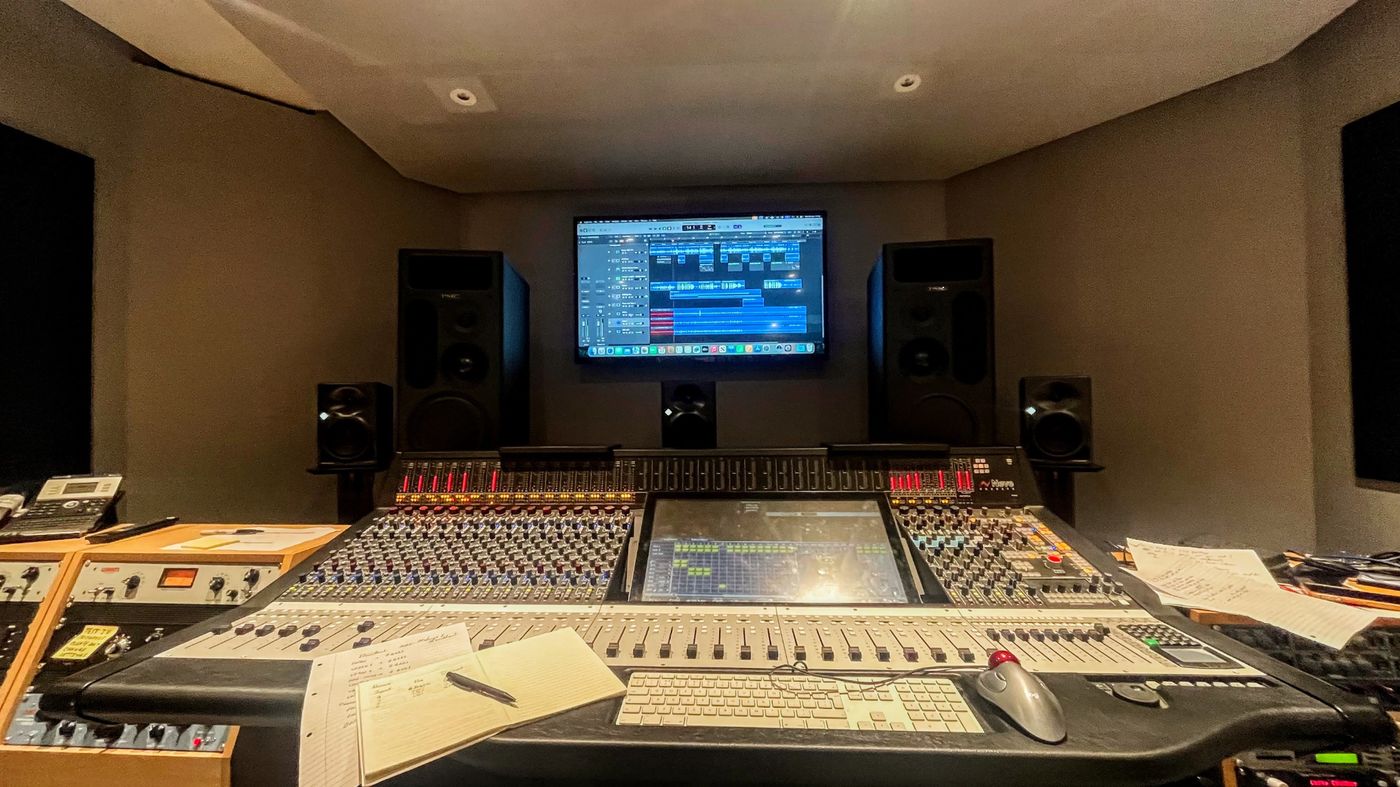
Fig 1: Studio 1
The Importance of Pre-Production and Alignment
One of the most critical takeaways from my recent sessions is that a successful mix is actually secured weeks before the studio date. In the future, especially as I transition into more commercial, paid opportunities. Moving forward, I will establish live performance vetting and comprehensive pre-production as mandatory standards in my workflow. Seeing an artist or an ensemble play live before hitting the studio is invaluable. It ensures that everyone stepping onto the studio floor is fully prepared and capable of executing the arrangement. A studio is a magnifying glass; it highlights both brilliance and under-preparation.
Moving forward, my standard practice will include clear contractual agreements regarding the nature of the project. Approaching a session intended for a commercial release requires a vastly different mental, emotional, and technical investment than simply tracking a rough demo. As engineers, we pour our hearts and finite energy into capturing these sounds, and we want to see those efforts reach the world. Ensuring the project is slated for release guarantees that the mutual effort put in on the studio floor is honored.
Defining the Role: Engineer vs. Producer
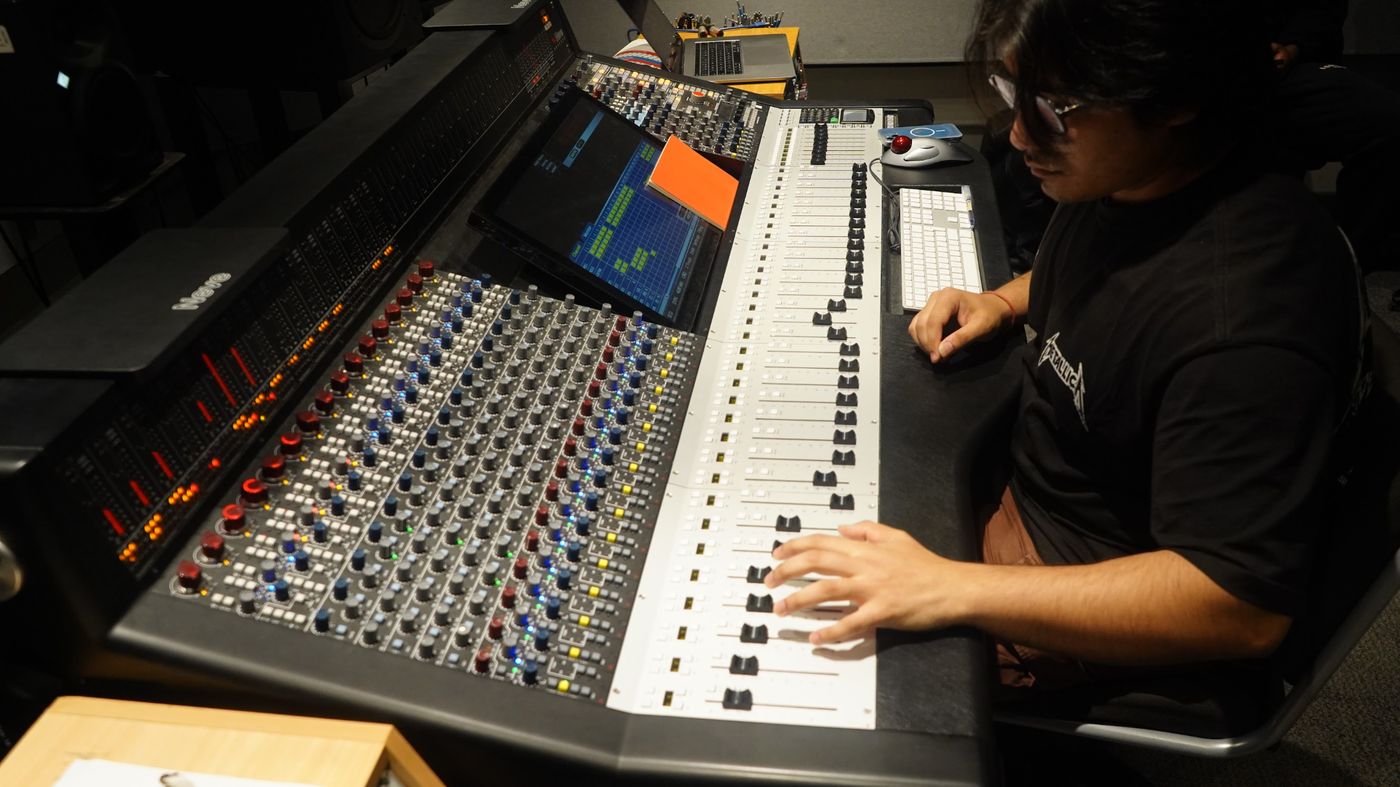
Fig 2: Yours Truly
The studio is a collaborative space, but ambiguous boundaries can lead to friction, especially in the post-production and mixing phases. I have learned that establishing exact roles and crediting before a session begins is essential for a healthy working relationship.
Are you hiring me purely as a Recording Engineer, or as a Producer? If the brief is engineering, my job is acoustic capture, full stop. If it stretches into production, then it's on me to push the artist, call for another take when the timing slips, and shape the arrangement. Blur that line without agreeing on it first and you almost always pay for it later, usually during the mix. Setting clear boundaries and sorting out credit upfront isn't just tidy business; it protects the relationship the music depends on. Weighing up what worked and what didn't after each session, then turning those conclusions into a concrete plan for the next one, has become a habit rather than an afterthought (Gibbs, 1988).
Contractual Agreements:
Moving forward, my standard practice will include clear contractual agreements regarding the nature of the project. Approaching a session intended for a commercial release requires a vastly different mental, emotional, and technical investment than simply tracking a rough demo. As engineers, we pour our hearts and finite energy into capturing these sounds, and we want to see those efforts reach the world. Ensuring the project is slated for release guarantees that the mutual effort put in on the studio floor is honored.
Technical Epiphanies: Less is More (Until it Isn't)
On the technical side, my overarching approach to engineering has matured significantly throughout these sessions. I have learned that textbook theory only takes you so far; in the middle of a fast-paced tracking session, you do not have the luxury of consulting a manual or second-guessing a schematic. Instead, you must rely on active listening, read the acoustic energy of the room, and instinctually adjust to the physical sound unfolding in front of you (Schön, 1983). This practice of "reflection-in-action" has fundamentally reshaped my studio workflow, teaching me to prioritize my ears over my eyes.
Equally important has been my shifting philosophy regarding microphone application. Early on, the temptation is often to over-engineer a source, assuming that more microphones will automatically yield a "bigger" or more professional sound. I have since discovered the delicate balance of this approach. While an elaborate, multi-microphone array is sometimes absolutely necessary to construct a complex, three-dimensional tonal landscape, it is not a universal solution. Frequently, a single, meticulously placed microphone perfectly captures the emotional intent the mix demands. In those instances, adding redundant microphones merely introduces unnecessary phase smearing and frequency masking, proving that anything more simply gets in the way of the music.
One of the most pleasant technical surprises of my Major Project was the performance of the Rode M5 small-diaphragm condensers. These pencil mics proved to be absolutely top-tier, providing stunning clarity, transient response, and a beautiful stereo image on a variety of acoustic sources. It reinforced the golden rule of audio: trust your ears, not the price tag.
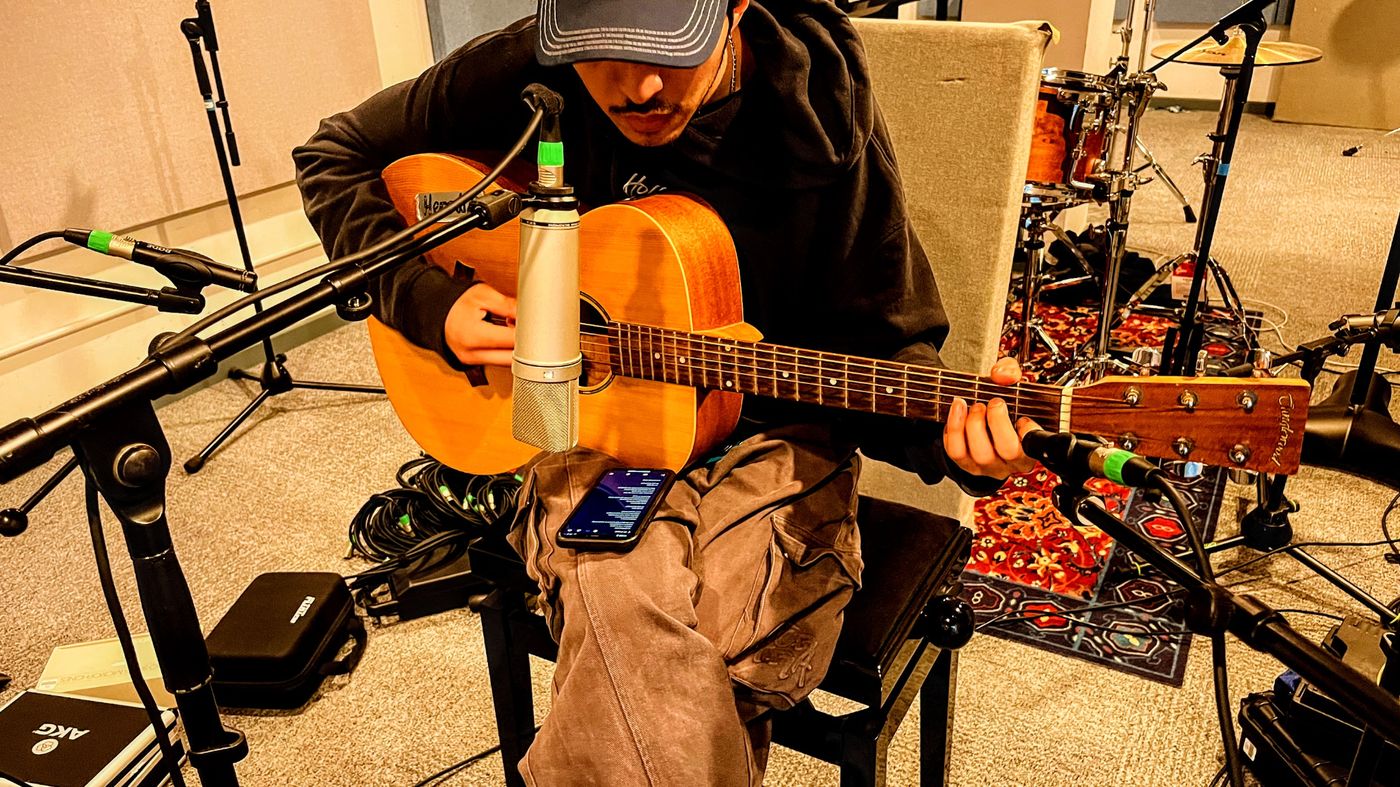
Fig 3: Less/ More
Vibe Over Ego
Every session quietly rewrites how I approach the next one, and over time those small adjustments compound (Kolb, 1984). What that has taught me is that the single biggest factor in a record isn't the console or the room — it's the vibe.
Given the choice, I'll take a humble, hungry musician over a technically flawless one with a big ego every single time. When an artist brings warmth and good intentions into the room, my whole engineering mindset shifts with it. In such a collaborative environment, even when my role is strictly limited to tracking, I make it a priority to prepare meticulously organized stems, ensuring a seamless workflow for the mix engineer. Music is a relationship business. People remember how you made them feel, and good energy has a way of ending up in the record.
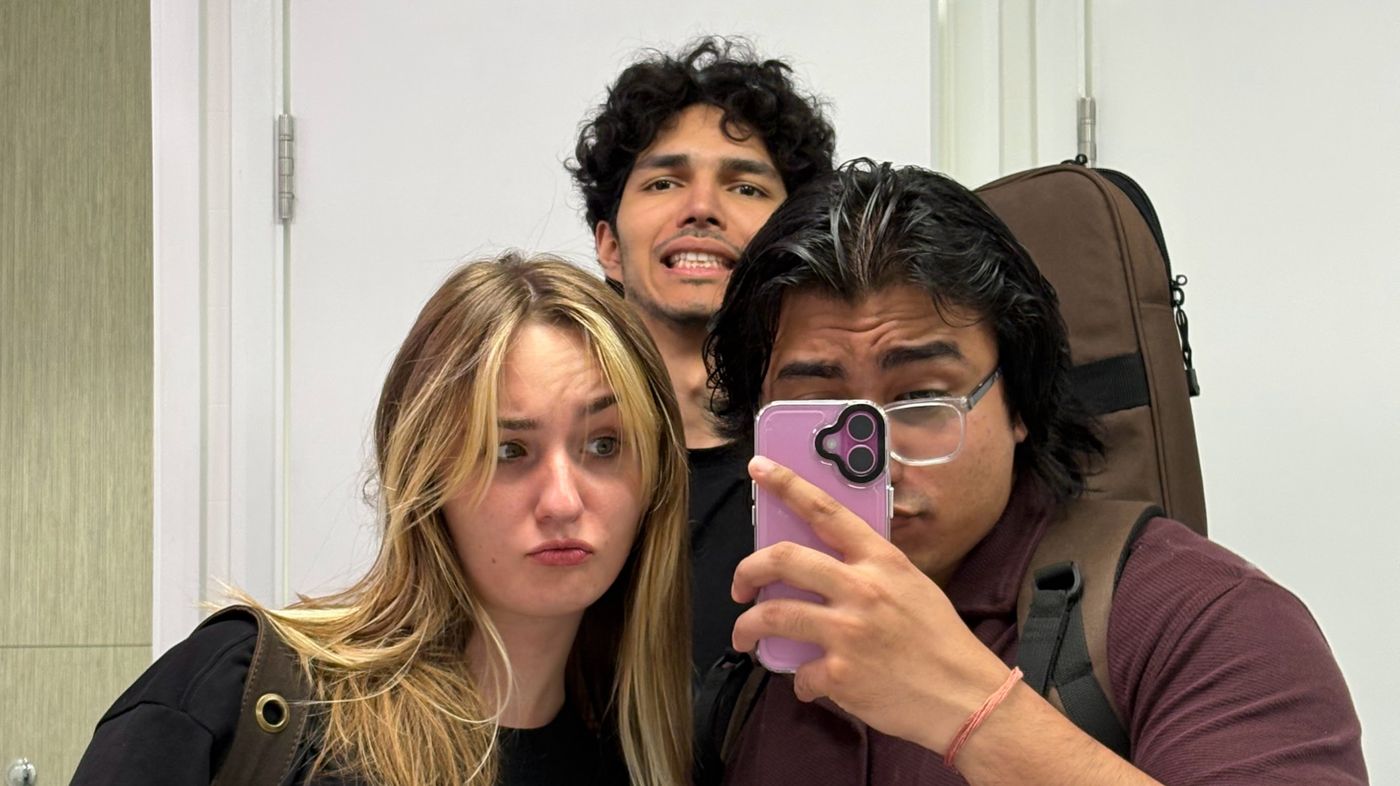
Fig 4: With Joey and Ema after the recording
Serving the Vision
Ultimately, unless you are working in a highly sterile, corporate commercial environment, 98% of the time, the artists in front of the glass are pouring their hearts out. They are vulnerable. In those moments, the engineer's personal musical taste does not matter. Our job is to serve their vision, respect their emotional state, and build a sonic environment where they feel safe enough to deliver their best performance.
I don't do this purely for the money; I do it out of a profound love for music and the collaborative process. But I also want the work to mean something. I want to help build records that see the light of day, alongside artists who respect the craft, share the credit, and leave their egos at the door. That is the kind of studio environment I am committed to building.

Fig 5: Someone’s Vision
References
Dewey, J. (1933) How We Think: A Restatement of the Relation of Reflective Thinking to the Educative Process. Boston: D.C. Heath.
Gibbs, G. (1988) Learning by Doing: A Guide to Teaching and Learning Methods. Oxford: Oxford Polytechnic (Further Education Unit).
Kolb, D. A. (1984) Experiential Learning: Experience as the Source of Learning and Development. Englewood Cliffs, NJ: Prentice-Hall.
Schön, D. A. (1983) The Reflective Practitioner: How Professionals Think in Action. New York: Basic Books.