Day 1: Studio 2 – Drums, Spatial Tetris, and Clicks
Friday, May 15th
We kicked off the first day of recording in Studio 2, focusing entirely on rhythm. Our drummer, AJ, who I had recorded previously—brought in his own snare and cymbals.
Studio 2 is a fantastic but highly confined acoustic space. Setting up the kit immediately tested my mic stand management. To avoid low-frequency rumble traveling into the microphones, I had to play a careful game of spatial Tetris, ensuring none of my heavy mic stands physically touched or overlapped with AJ’s cymbal hardware.
Once the hardware was safe, I built out an extensive drum micing setup. Every choice was deliberate, balancing traditional workhorse techniques (Robjohns, 2003; Blomqvist, 2010; Gasson, n.d.) with a few bold experiments to capture both transient detail and raw, physical weight:
- Kick Out: Neumann U87ai. Placed outside the resonant head, this was strictly to capture the low-end weight and physical "bigness" of the kick. It grabs the sub-harmonic bloom that dynamic mics miss, anchoring the kit towards a big sound (Brinck, n.d.; Pedersen and Grimshaw-Aagaard, 2018).
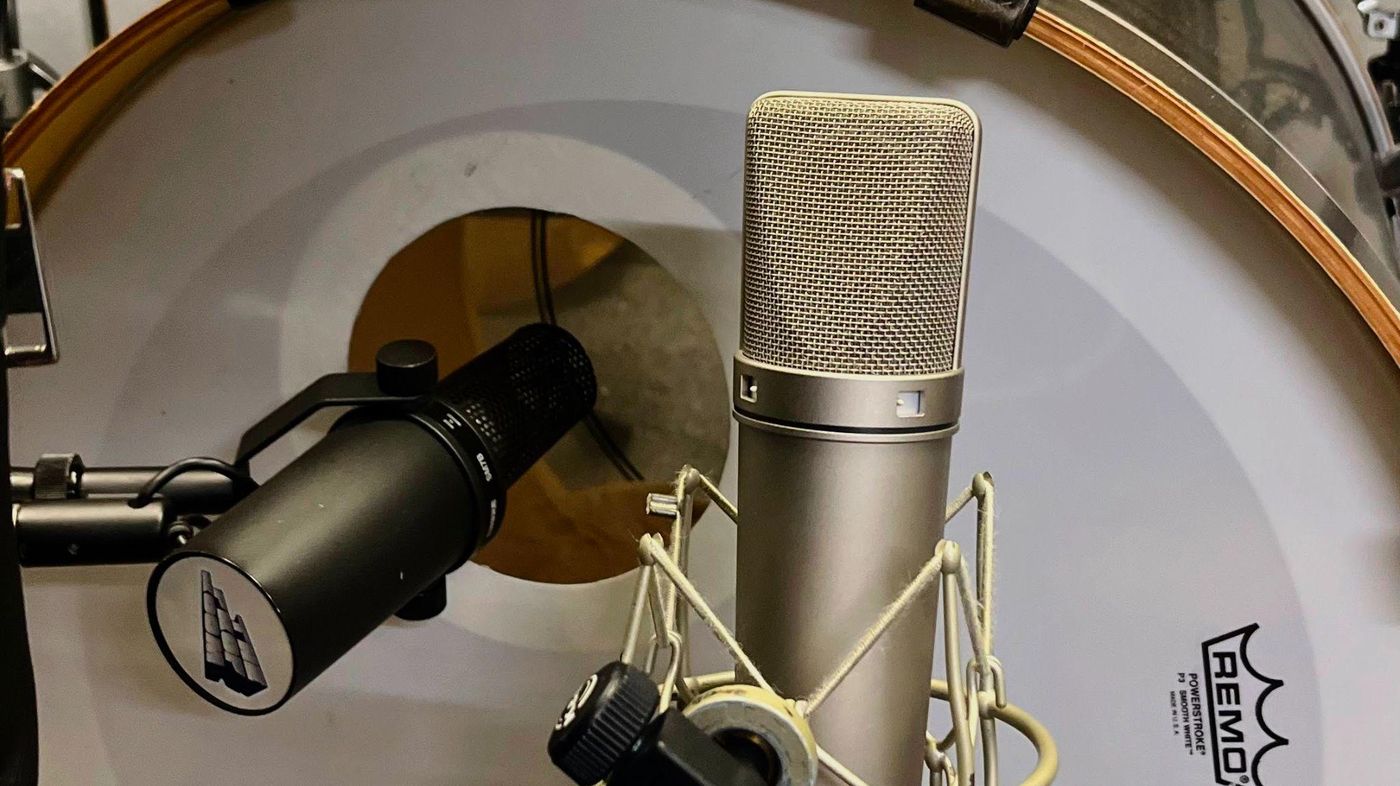
Fig 1: Neumann U87ai placed outside the kick drum and SM7B placed inside it
- Kick In: Shure SM7B. Positioned halfway into the shell and slightly off-axis to the beater to grab the aggressive, focused attack. Having both the Kick In and Kick Out recordings gives the Mixing Engineer a lot more choices, than just having a single mic.
- Snare Top: Shure SM58 (Capsule Removed). Taking the grille off effectively turns this into an SM57. I placed the capsule right up against the head to capture the raw midrange body and initial stick crack, while rejecting the hi-hat. The SM57 is the industry standard for recording snares as it does a very good job in capturing the essential midrange crack of a snare (Shure, 2026).
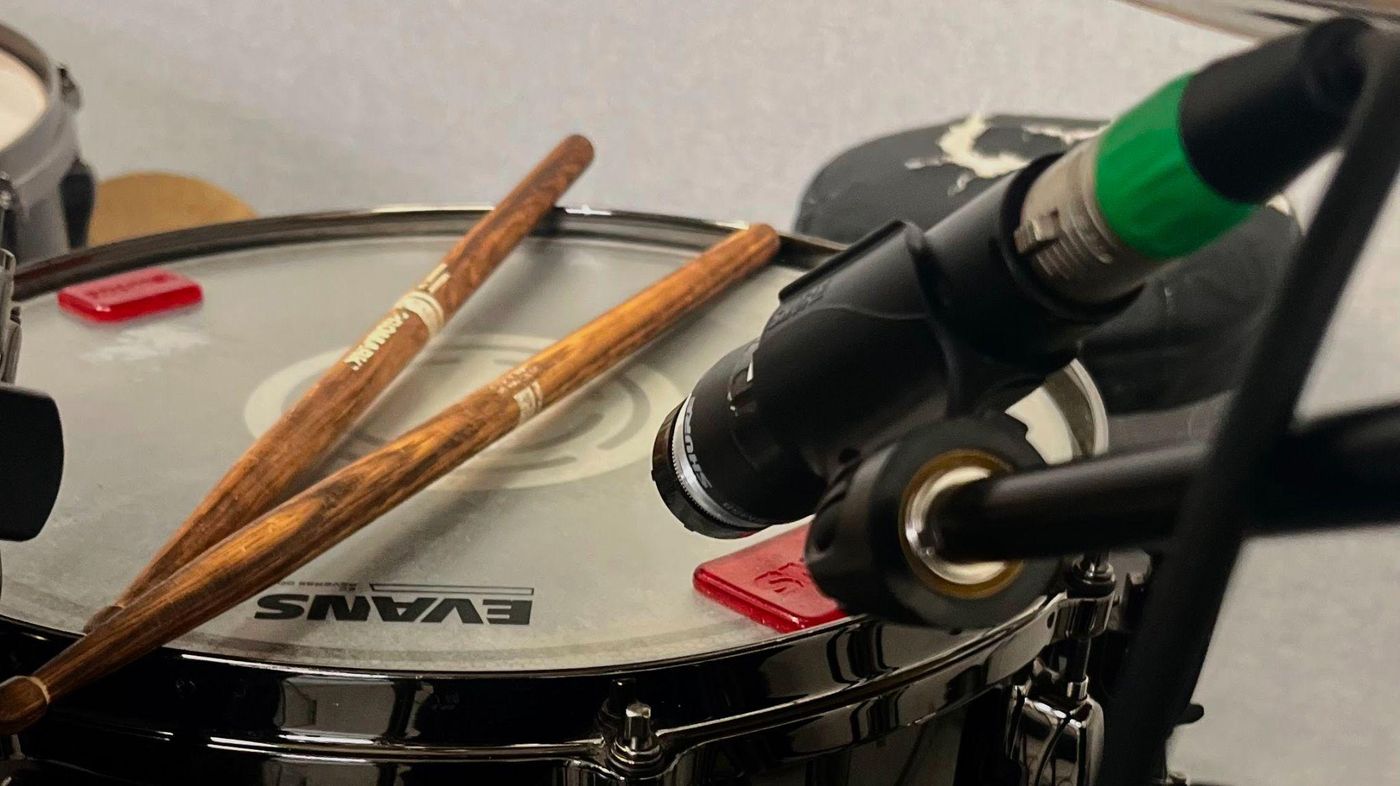
Fig 2: Shure SM58 with grille removed on the snare batter head
- Snare Bottom: Shure VP88. This was a massive success. The VP88 is a stereo M/S mic, but by routing just the Mono (Mid) side pointing straight up at the snare wires, it acted as a phase-coherent condenser, capturing the transient snap beautifully (Rumsey and McCormick, 2014).
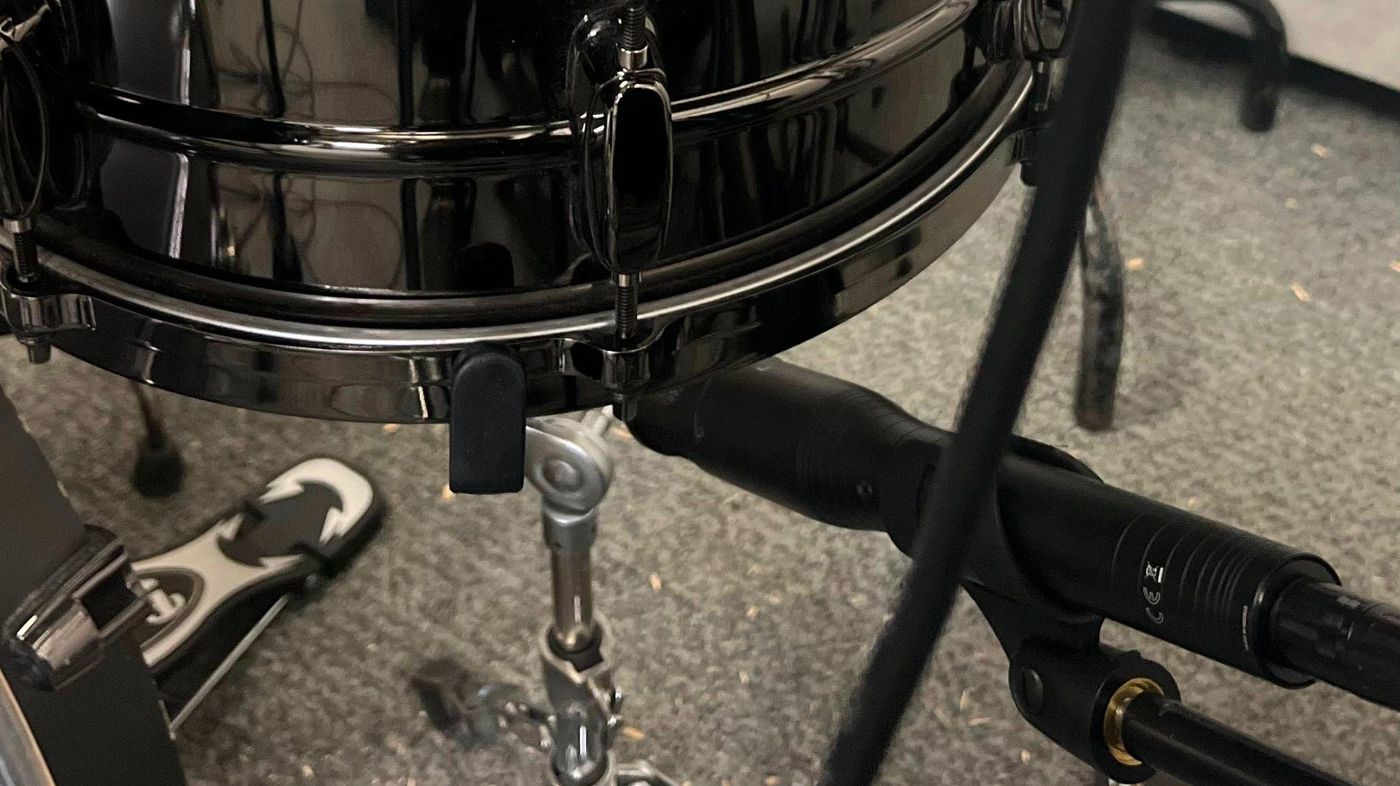
Fig 3: Shure VP88 stereo M/S microphone routed in mono to capture the snare bottom
- Overheads: Neumann KM184. In a tight room like Studio 2, these small-diaphragm condensers gave me a fast, pristine stereo image of the cymbals without capturing problematic low-mid room reflections.
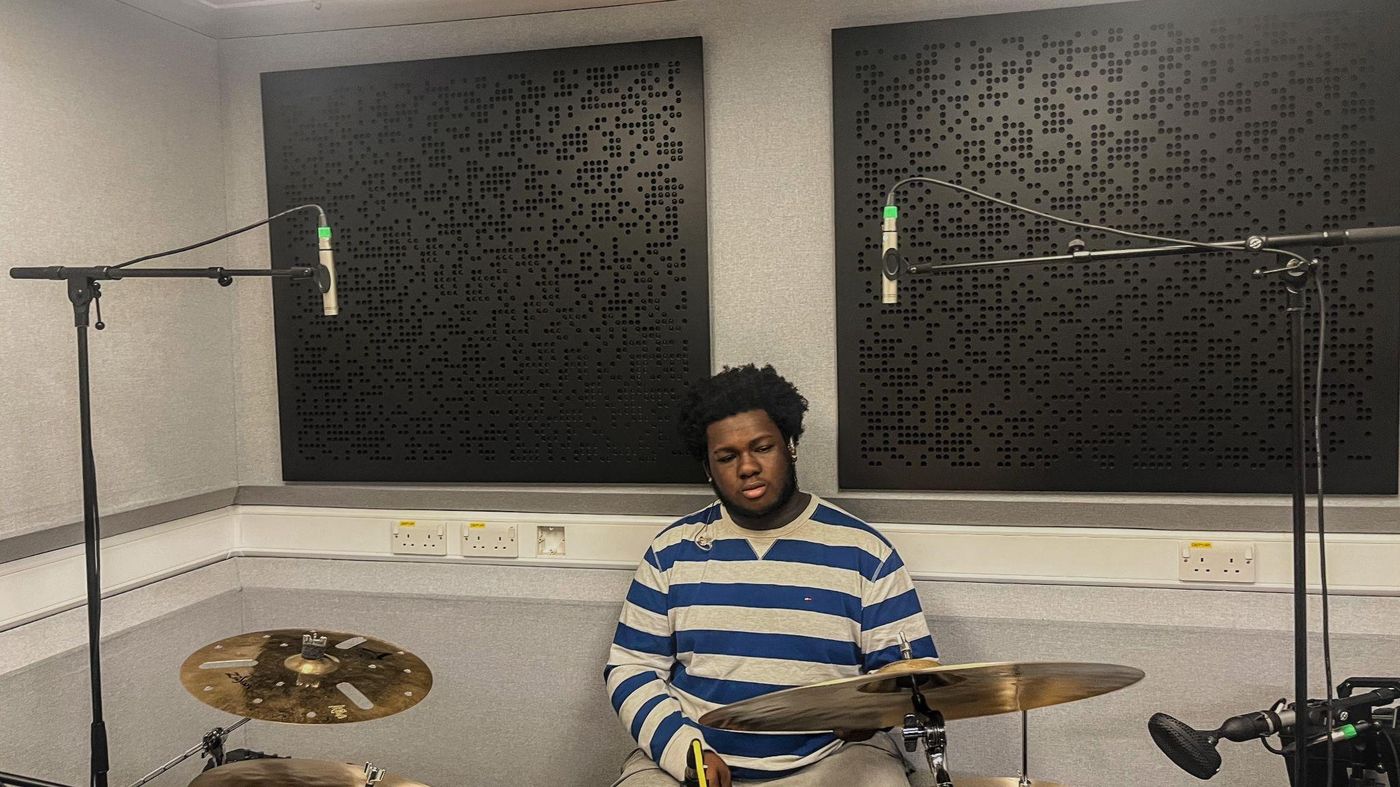
Fig 4: Neumann KM184 as drum overheads
- Toms: Shure SM58 on the Hi-Tom for punchy resonance, and a Shure Beta 57A on the Low Tom. The Beta 57A’s supercardioid pattern aggressively rejected the ride cymbal bleed while keeping the floor tom thick.
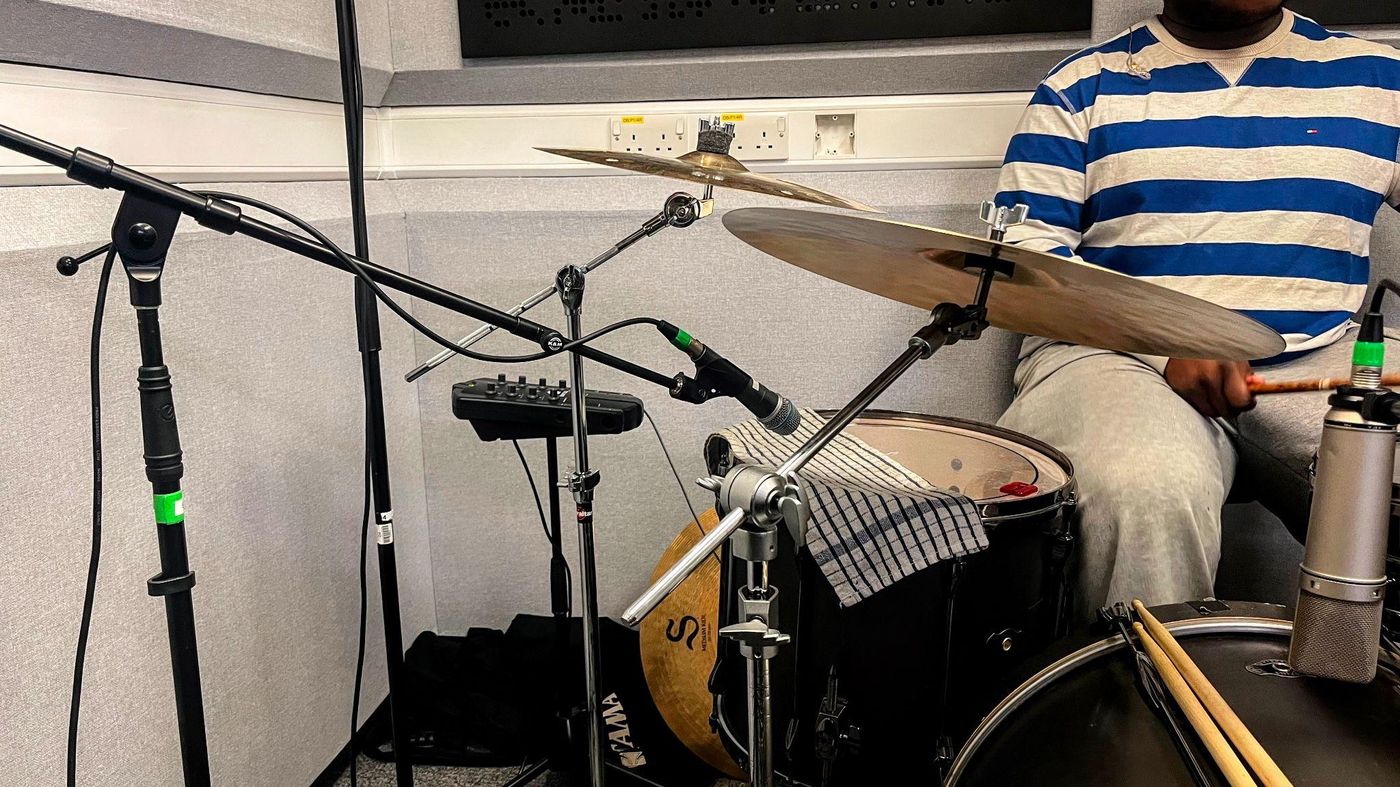
Fig 5: Shure Beta 57A positioned on the low tom
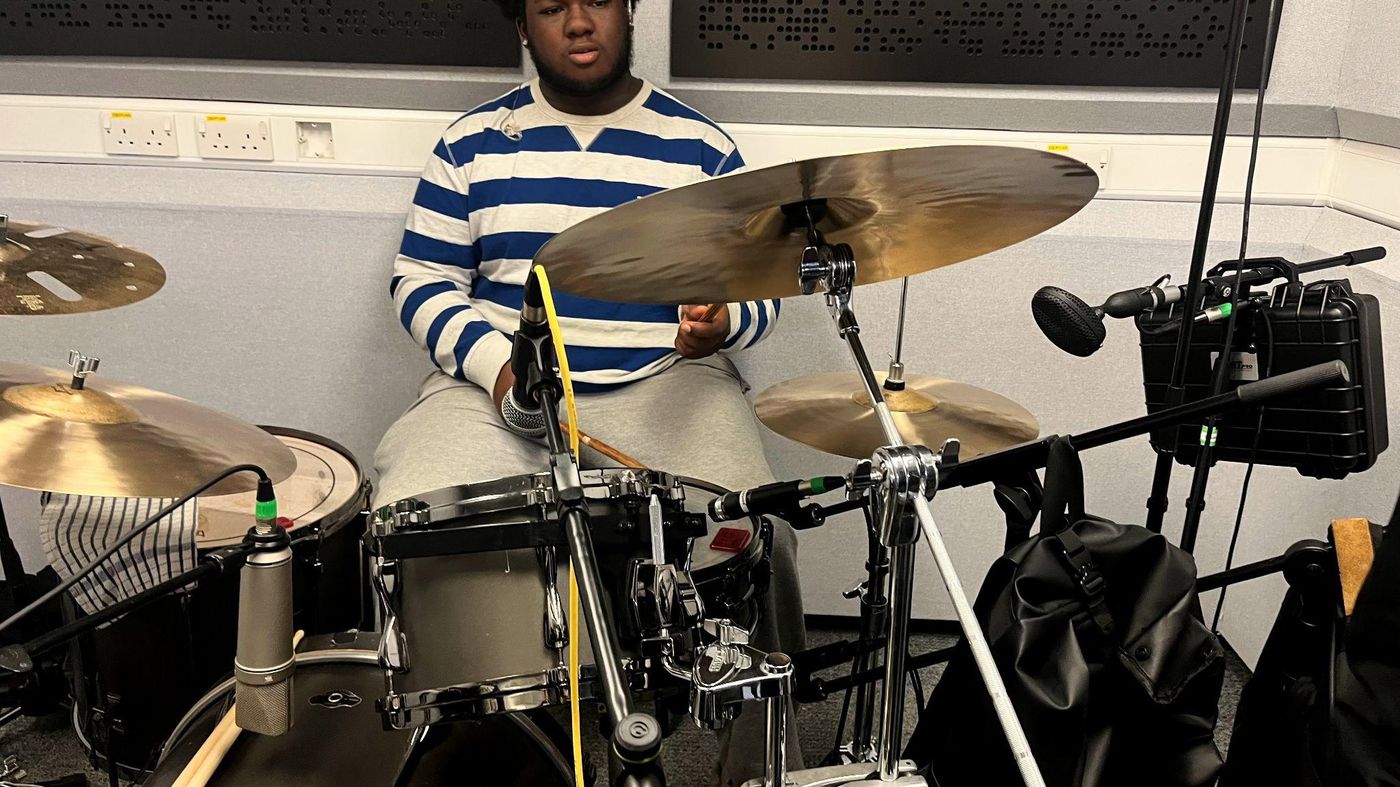
Fig 6: Shure SM58 positioned on the hi-tom
- Hi-Hat: Coles 4038. Condensers can make hi-hats sound brittle. The ribbon element of the Coles naturally rolled off the piercing top-end, leaving a dark, smooth tone that won't fight Rachel's vocals later.
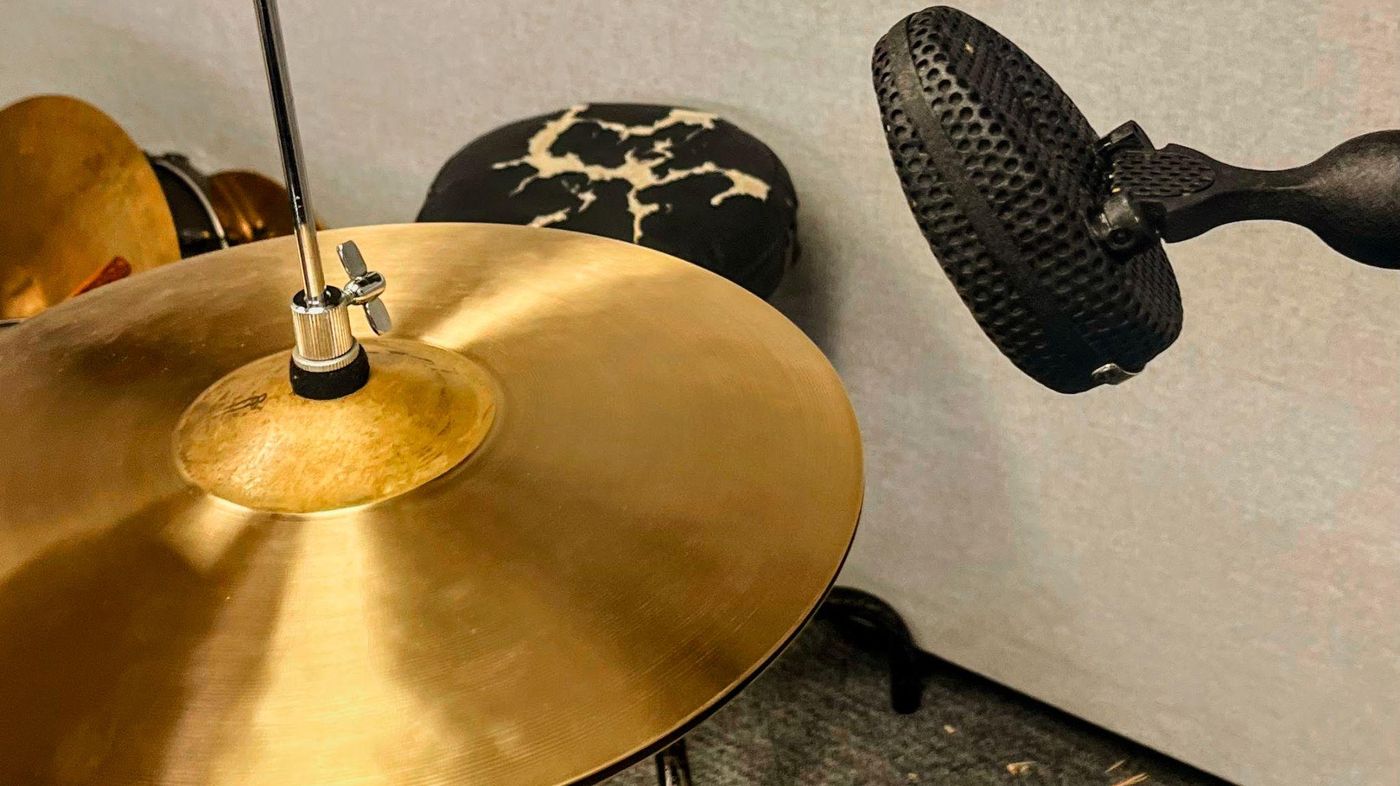
Fig 7: Coles 4038 capturing the hi-hat
- Wurst (Trash Mic): Neumann U87. I placed this premium condenser right in the center of the kit, above the kick and pointing at the drummer. It’s a bold move, using a condenser as the Wurst Mic, but it captures a cohesive snapshot of the kick/snare relationship. Once heavily compressed in the DAW, this will be the ultimate "glue" for my drum bus.
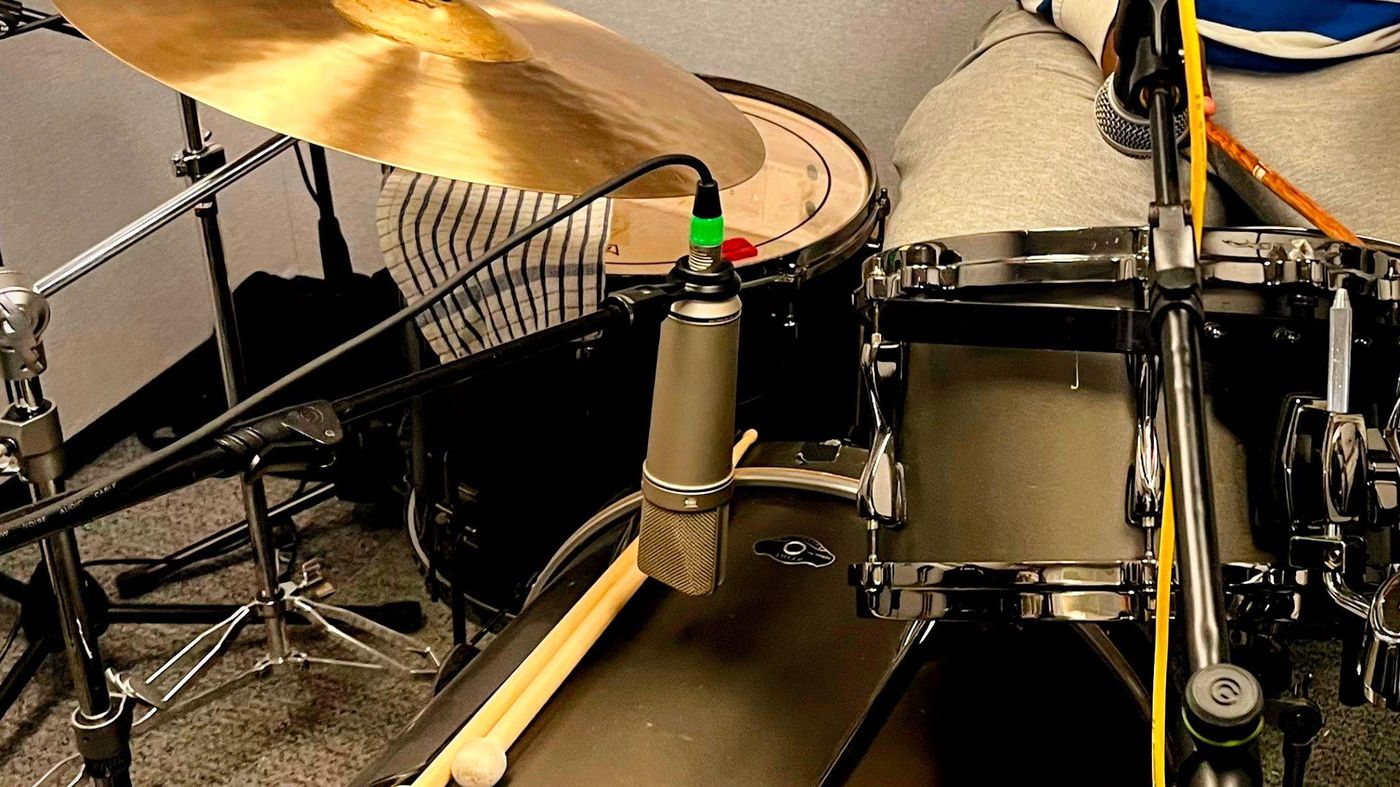
Fig 8: Neumann U87 positioned as a Wurst mic in the center of the drum kit
- Hall: SE4400. Deployed to capture the natural decay of the space.
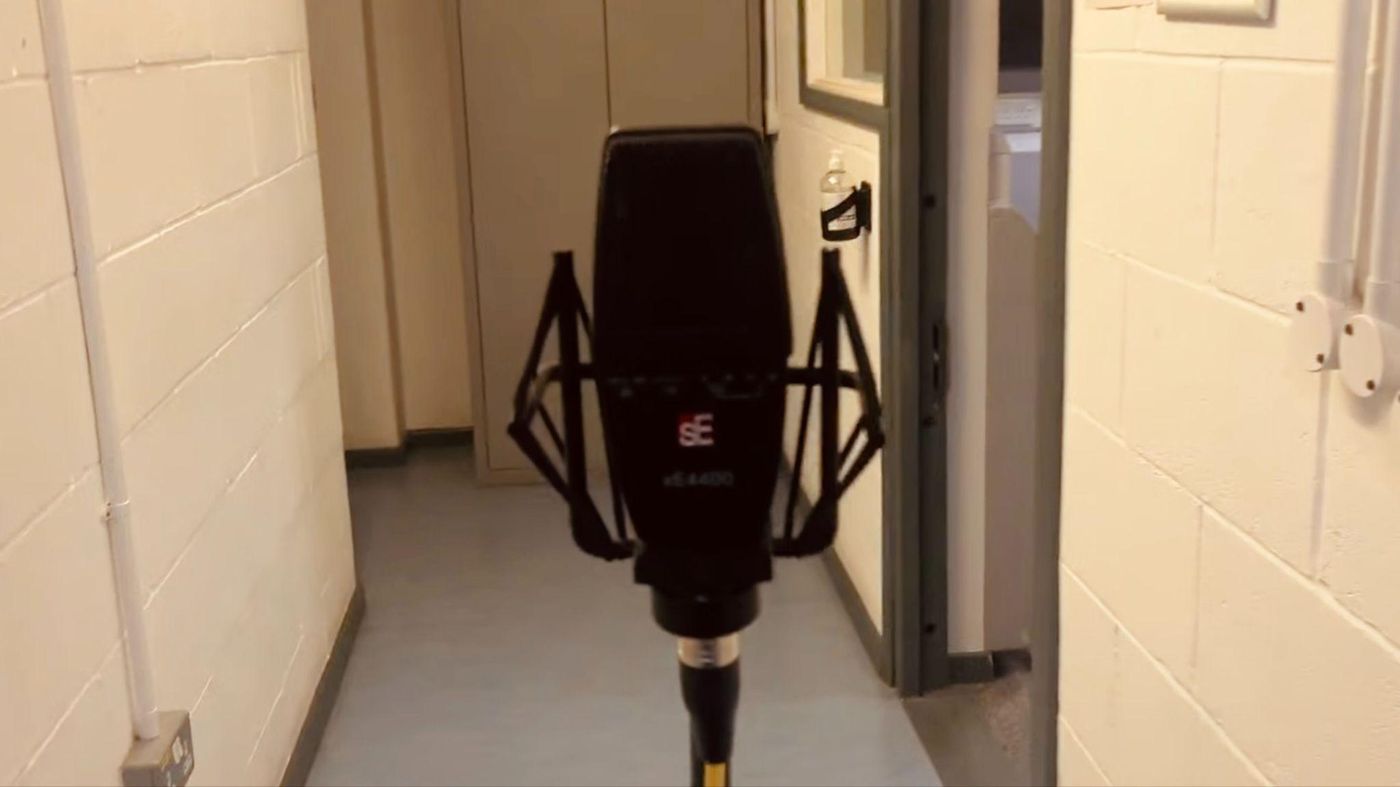
Fig 9: SE4400 deployed in the hall to capture natural spatial decay
After a quick soundcheck, Rachel and the producer/guitarist, Spencer, came in with a sorted demo of the first track. AJ is a pro—it took him two takes to figure out the groove, and we were recording. Rachel and Spencer popped in between takes with feedback, and we knocked the first song out incredibly smoothly. We then tracked the second, jazz-pop song called "Brown Suit," which sounded fantastic and only required a few targeted punch-ins to match the vocal phrasing.
The 30-Minute Sprint: Finger Clicks With just half an hour left on the clock, we needed to track a group of four people doing finger clicks. I completely tore down the drum mics and set up a Blumlein closed-pair configuration using two Neumann U87s. The Blumlein technique involves setting two bidirectional (figure-8) microphones at a 90-degree angle to one another, with their capsules positioned as close together as physically possible (Wikipedia, n.d.). By switching both U87s to their figure-8 polar patterns, this coincident setup captures a highly accurate, 360-degree stereo image.
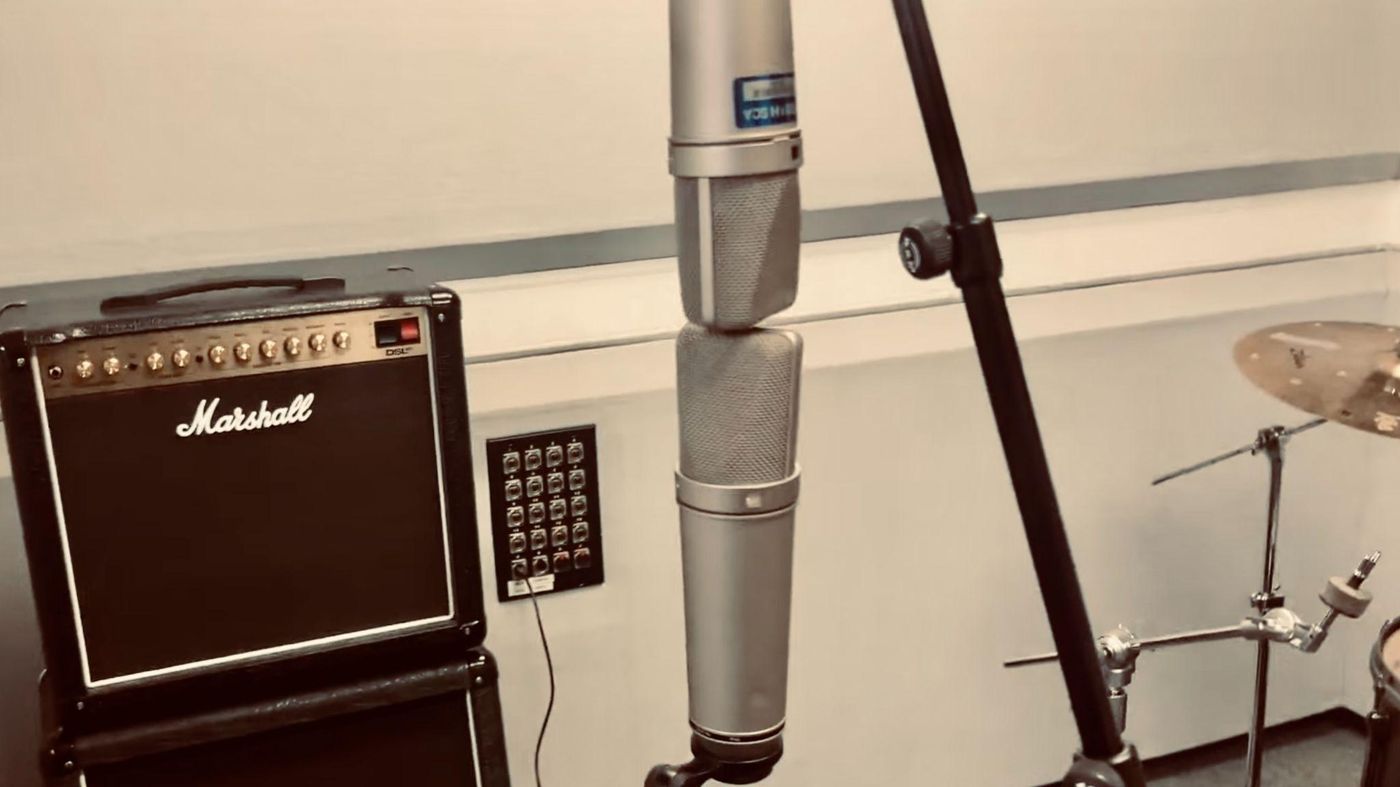
Fig 10: Two Neumann U87s in a Blumlein closed-pair configuration for tracking finger clicks
I placed the mics directly in the center of the four performers. Because they were all performing the exact same part, I routed a single, unified mix across four outputs on our Hearback system so everyone heard the exact same monitoring. The Blumlein technique kept everything perfectly phase-coherent (Huber, Runstein and Audio Engineering Society, 2018; AEA Ribbon Mics, 2018). The result? Incredibly snappy, crisp clicks that will sound like a massive crowd once I apply delay and reverb in the mix.
The Intermission: Session Housekeeping
Before moving into the second tracking day, I sat down and meticulously cleaned up the DAW sessions. When you are moving between studios and bringing in new musicians, having a messy template is a recipe for disaster. I color-coded, labeled, and routed everything so that Day 2 would be technically flawless.
Day 2: Studio 1 – Pianos, Brass, and The 3:30 PM Deadline
Monday, 18th May
Day 2 kicked off with an incredible amount of energy in Studio 1. Rachel was buzzing with excitement, her producer Spencer had invited a photographer friend to document the session, and AJ was hanging out in the room. The undisputed MVP of the day, however, was JJ—a brilliant multi-instrumentalist who tracked piano, trumpet, and violin.
The Piano & The Logic Tempo Pivot We started with JJ on the piano. To capture a wide, detailed image of the instrument, I utilized a multi-mic approach (Robjohns and White, 2004; Inside Blackbird, 2023):
- A/B Spaced Pair: Two Neumann U87s capturing the left and right spread.
- X/Y Overhead: A stereo X/Y pair positioned from above, looking directly down at the piano string. The X/Y configuration is a coincident stereo technique that utilizes two directional microphones (typically cardioid) placed with their capsules stacked as close together as physically possible, angled at 90 degrees toward the source. Because the capsules occupy nearly the exact same point in space, sound waves arrive at both microphones simultaneously. This configuration guarantees absolute phase coherence and mono compatibility, while still capturing a crisp, highly focused stereo spread of the piano's hammers and strings (Rumsey and McCormick, 2014; Hejia, n.d.).
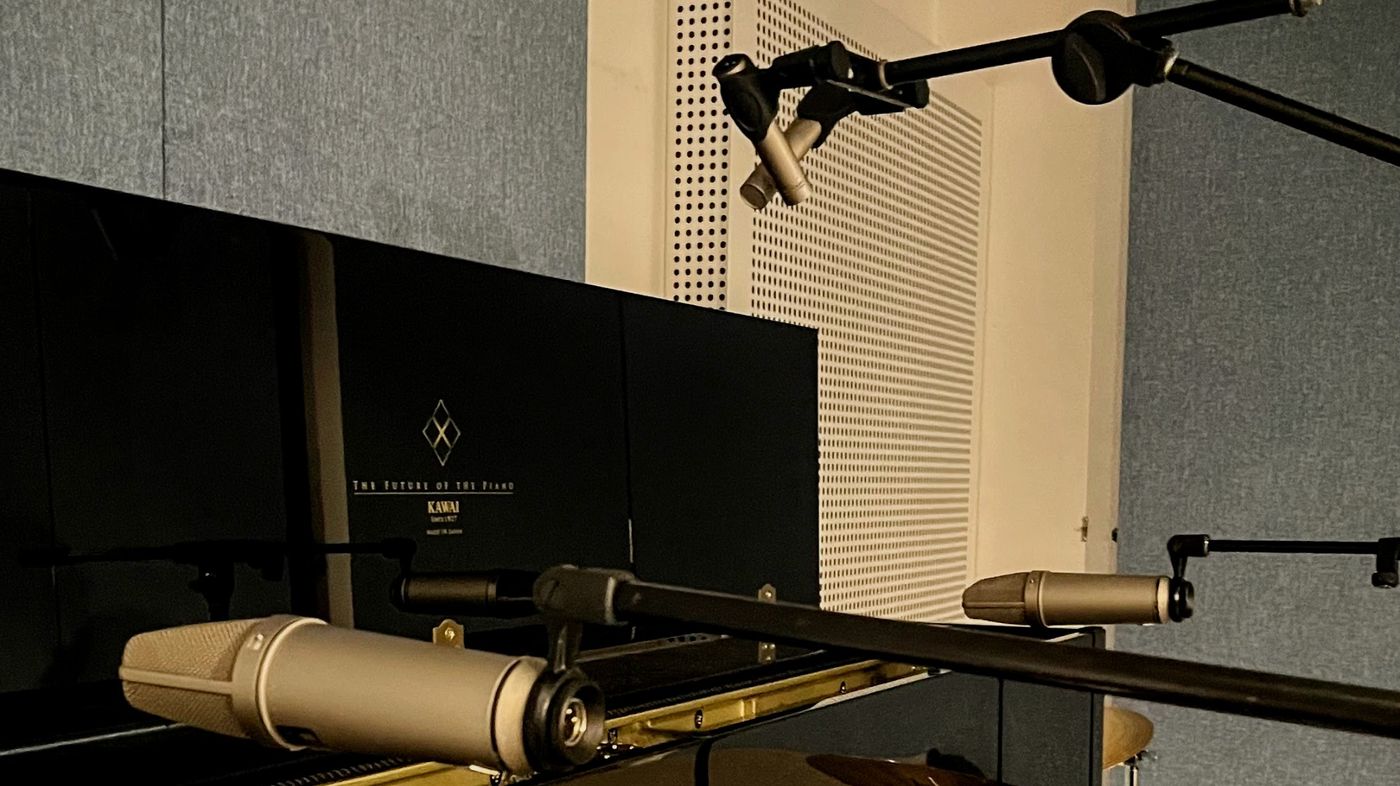
Fig 11: Piano Stereo Micing Techniques
Almost immediately, we hit a production hurdle. Rachel and Spencer hadn't finalized a tempo change for the outro, meaning Rachel’s original guide vocals were sung at the song's standard, static tempo. Before we could record JJ's piano outro, I had to fix the foundation in Logic Pro. I cut the guide audio, went into the Global Track to program the new tempo curve, and utilized time-stretching on the audio regions to match the new grid. I kept looping playback for Rachel, making micro-adjustments until she was completely satisfied with the feel. Once the tempo mapped perfectly to her vision, JJ laid down the piano for the outro.
Trumpet & Taming the SPL Next, JJ pulled out his trumpet. Brass instruments are notoriously loud and move a massive amount of air, so close-micing requires caution (Robjohns, 1999). Furthermore, you rarely hear trumpets recorded entirely dry, they are designed to excite acoustic spaces. To achieve a larger-than-life brass sound, I set up a three-tier spatial capture:
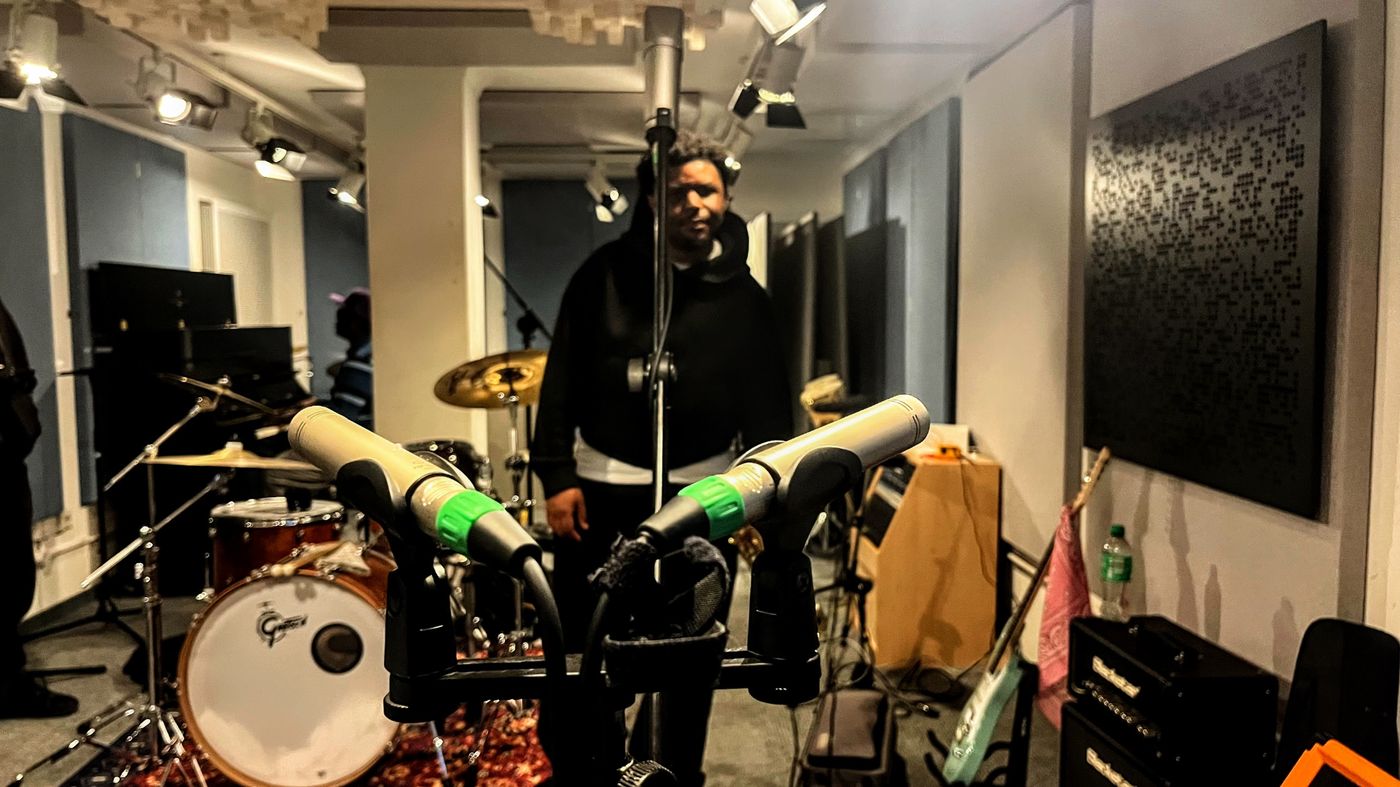
Fig 12: Microphone setup for the trumpet
- Close/Bell: Neumann U87. Placed slightly above the bell rather than directly in front of it. This off-axis placement prevented the intense sound pressure levels (SPL) from overloading the capsule while maintaining high-end clarity. (Robjohns, 1999)
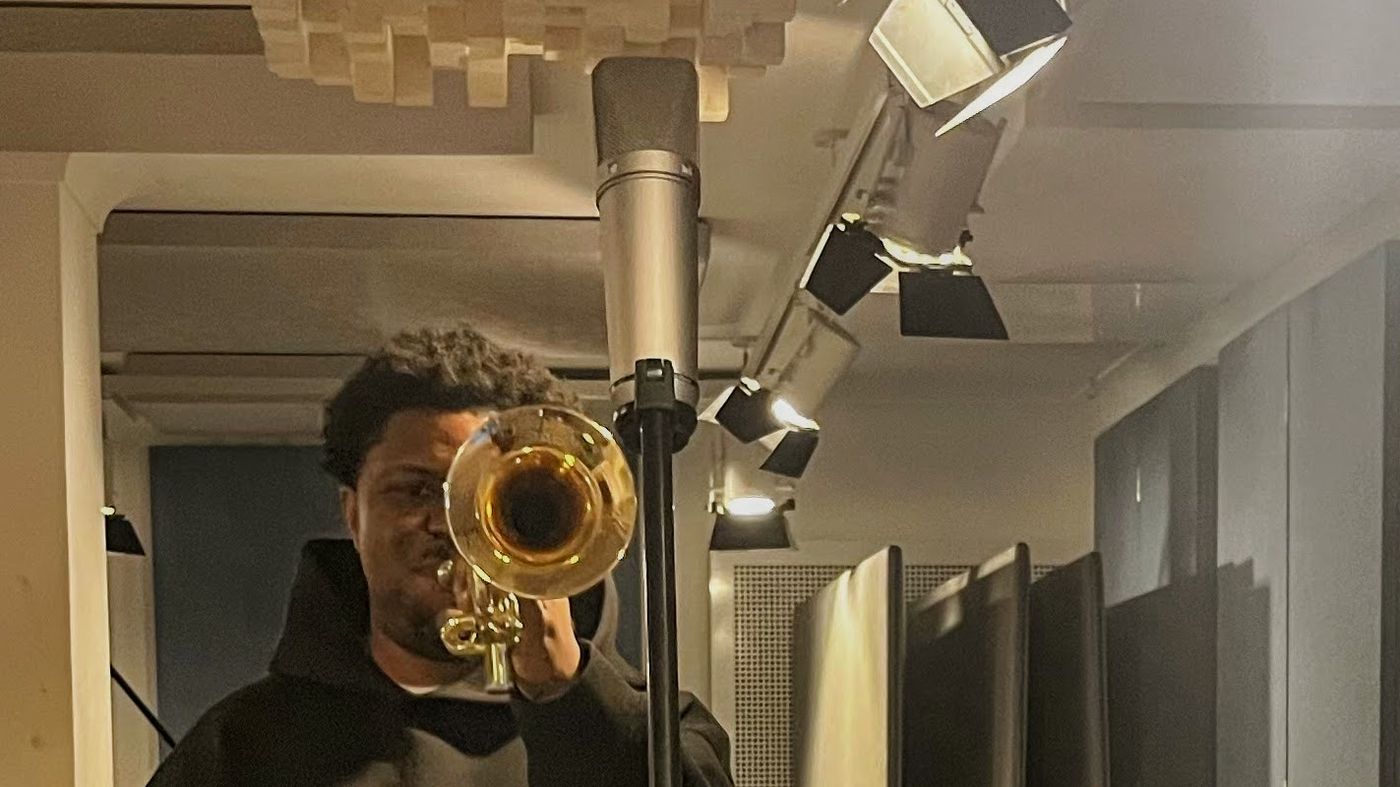
Fig 13: Neumann U87 placed looking down on the trumpet bell
- Mid/Room: KM184s (ORTF). Set up in a closed-pair ORTF configuration directly in front of the trumpet to capture the immediate width and natural blooming of the brass in the room. Developed by the French broadcasting organization (Office de Radiodiffusion Télévision Française), the ORTF technique utilizes two cardioid microphones with their capsules spaced exactly 17 cm (170 mm) apart and angled outward at 110 degrees. Because this specific spacing and angle roughly mimic the physical distance and acoustic shadow of human ears, the array relies on both time-of-arrival and intensity differences. This creates a wider, more realistic stereo image than a coincident X/Y pair, while still preserving a strong, phase-coherent center image (Rumsey and McCormick, 2014; Brixen, n.d.; Sengpiel, 1997; RØDE Microphones, 2018).
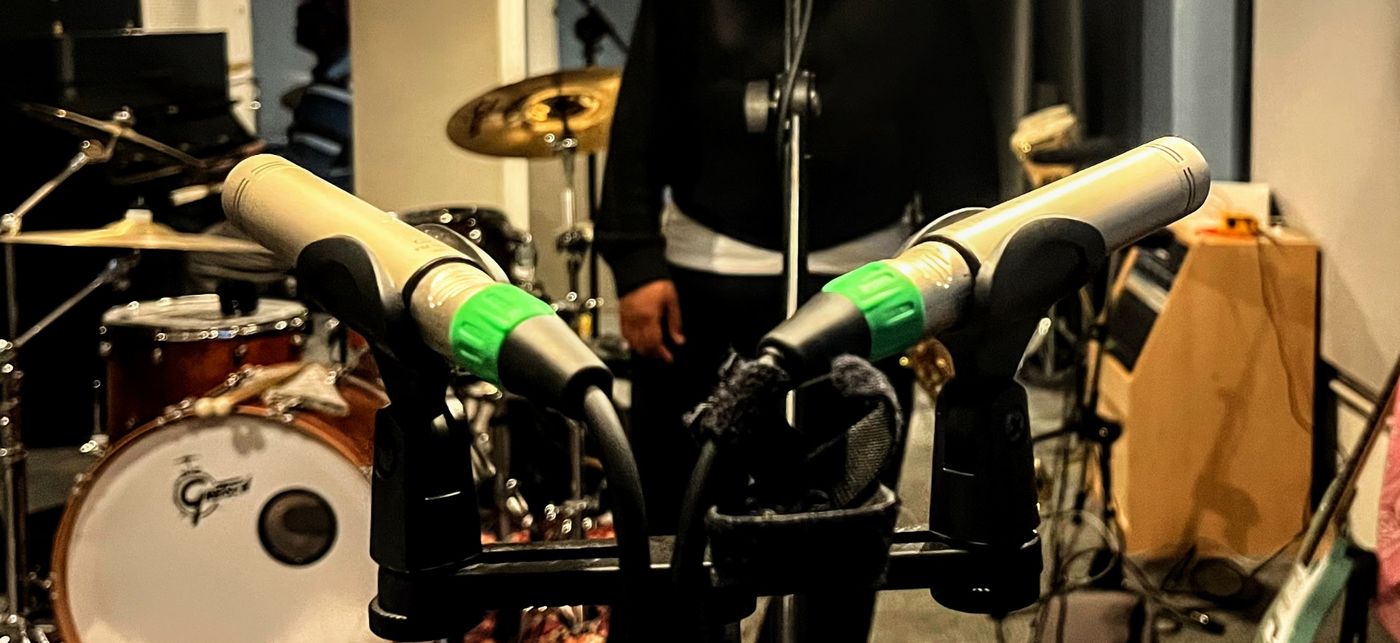
Fig 14: KM184s in a closed-pair ORTF configuration in front of the trumpet
- Hall: Neumann U87. Placed far back in the hall to capture the pure acoustic response and decay of the space.
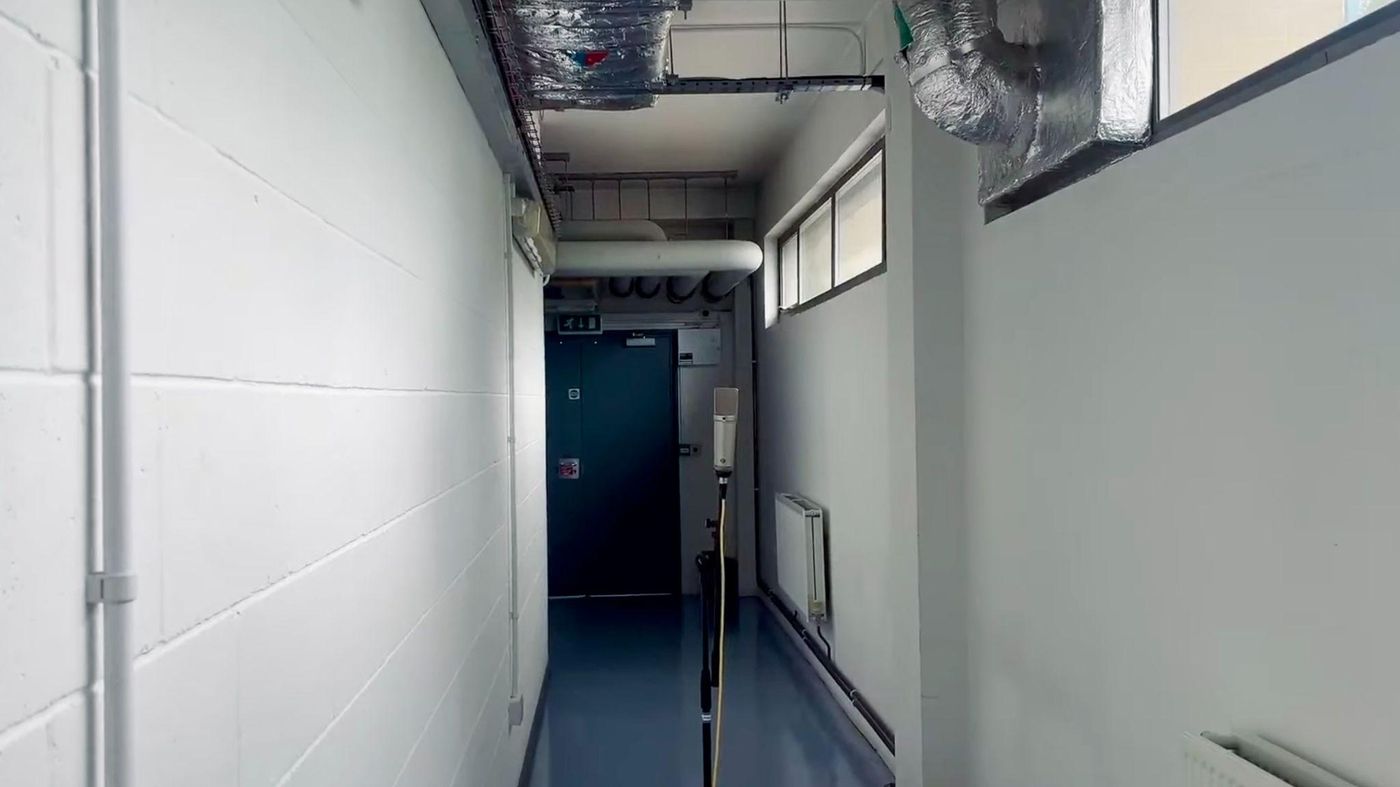
Fig 15: Neumann U87 placed in the hall to capture acoustic decay of the trumpet
The Electric Violin The next overdub was JJ on violin. He brought an electric model, which completely changed the miking strategy. Because it didn't generate enough acoustic volume (dbSPL) to interact with the room, a hall mic was entirely unnecessary. Instead, I focused purely on capturing the physical articulation of the bow against the strings (Robjohns and White, 2004):
- Close Mics: A Coles 4038 ribbon mic paired with a Neumann U87, both positioned incredibly close to where the bow strikes the strings.
Initially, the instrument's output jack was behaving badly, dropping signal. Fortunately, it stabilized, allowing me to capture a clean DI signal alongside the heavily textured close mics.
The 3:30 PM Deadline: Bass on the Clock With the violin wrapped, we looked at the clock. We were down to the wire, with just about 15 minutes left before we had to completely clear the room for a hard 3:30 PM studio cutoff. The pressure was on to capture Spencer's bass parts.
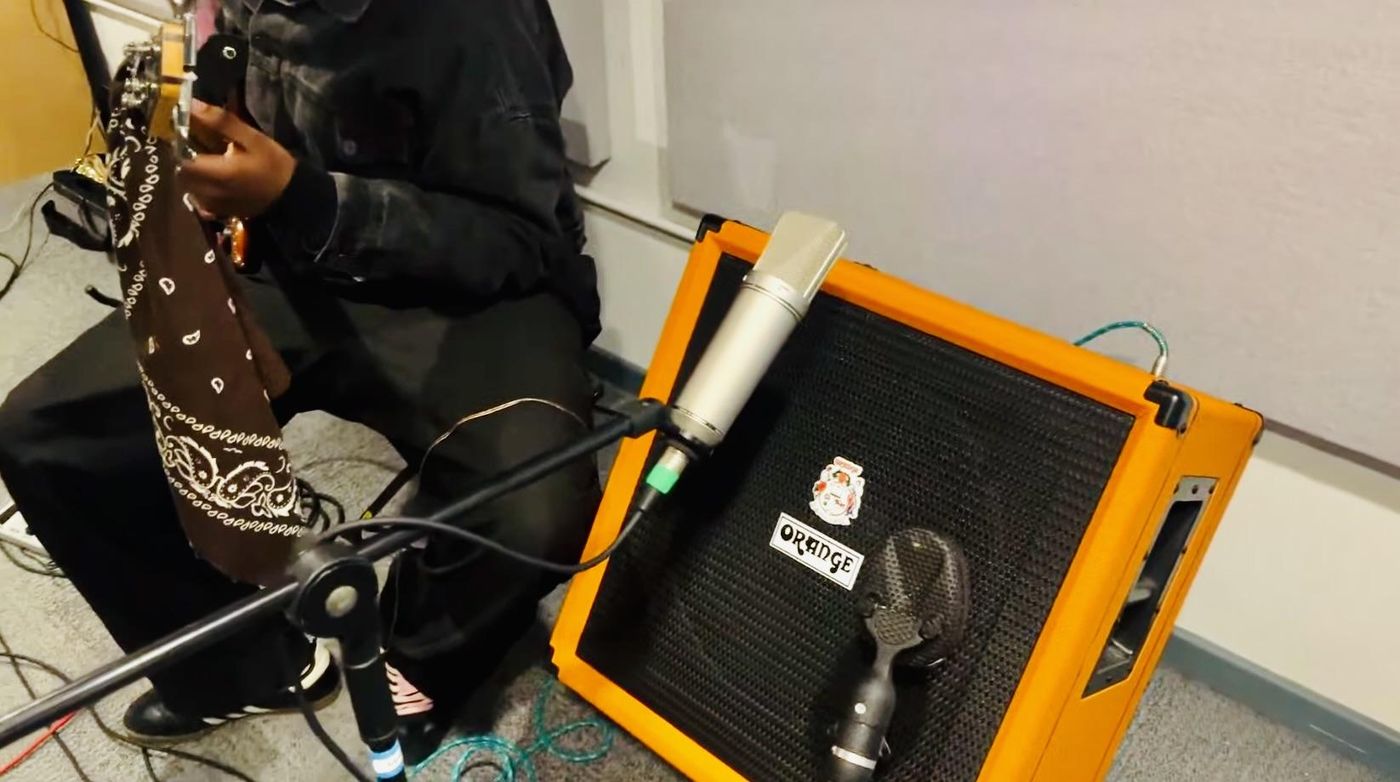
Fig 16: Three-channel bass guitar capture setup on an Orange bass cabinet
Despite the time crunch, I opted for a massive, three-channel capture. We combined the clean low-end of a DI signal with a heavily textured dual-mic setup on his Orange bass cabinet to ensure we had tonal flexibility in the mix:
- Neumann U87: Placed coming down from the top, angled to face the edge of the amp speaker cone. This was utilized to capture the punchy midrange and articulation of the bass lines.
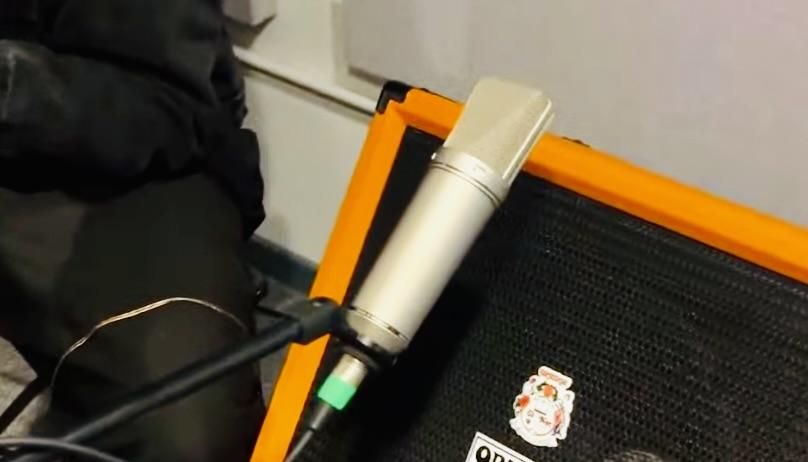
Fig 17: Neumann U87 angled toward the edge of the bass amplifier speaker cone
- Coles 4038: Positioned on the edge of the amp from the right side. The ribbon element of the Coles is perfect for rounding out aggressive frequencies while capturing a massive, thick low-end response from the cabinet.
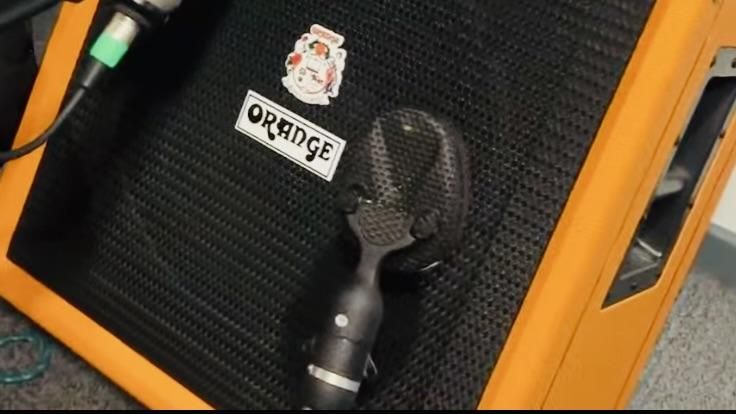
Fig 18: Coles 4038 positioned on the right edge of the bass amplifier
- DI Signal: A direct line straight into the console to guarantee sub-frequency clarity and phase alignment during the digital mix phase.
Spencer strapped in and delivered a series of blisteringly fast, tight takes, nailing his parts right before the clock ran out.
Day 3: Vocals and Studio Psychology
Friday, 22nd May
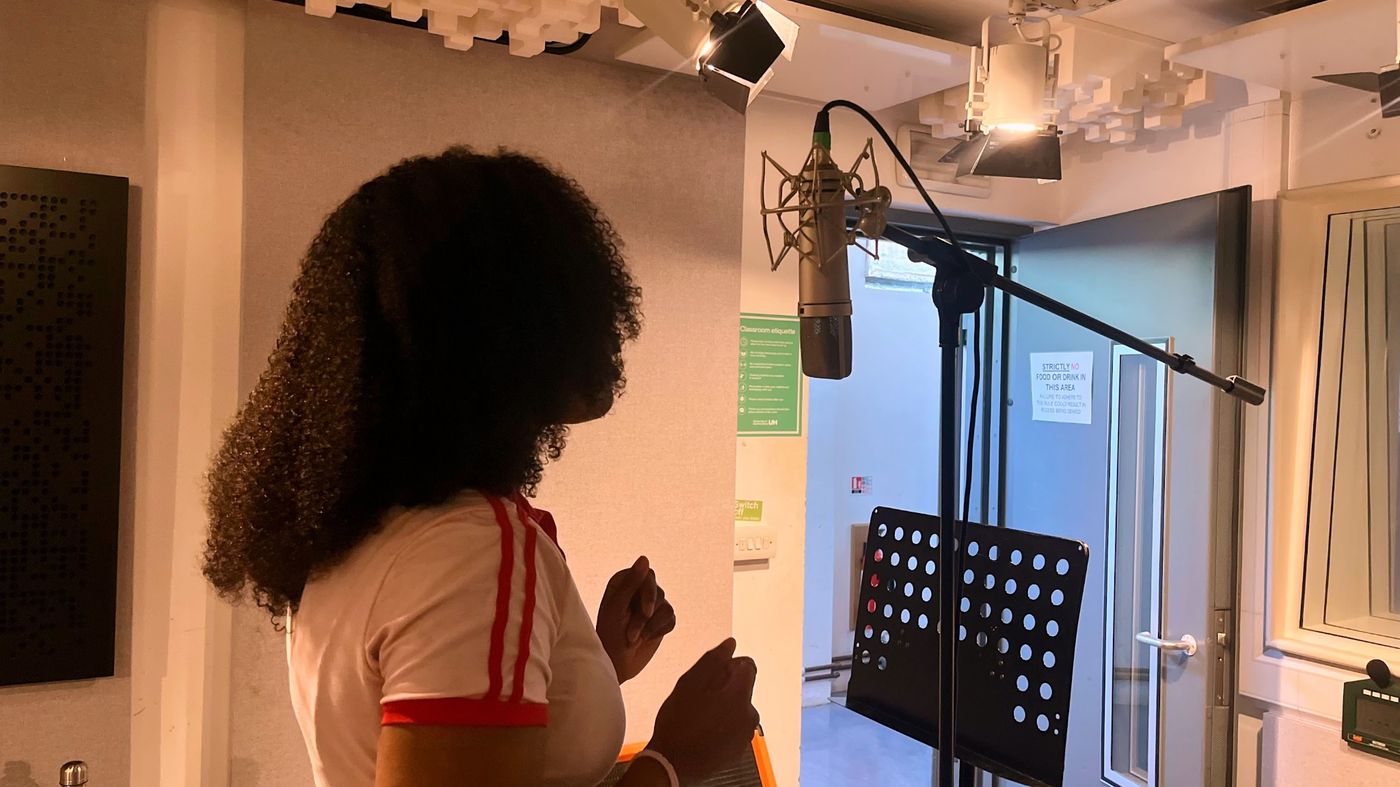
Fig 19: Lead vocal tracking session in the studio
The final day of tracking was dedicated entirely to Rachel's lead vocals. When capturing a commercial vocal, engineering goes far beyond microphone placement; it crosses into psychology and physical management.
For the vocal chain, I selected a Neumann U87. I mounted it upside down and positioned the capsule a little bit above her mouth, pointing at it at an off axis. This classic studio technique not only keeps the capsule clear of sheet music or lyric screens but effectively mitigates harsh plosives (pops) without solely relying on heavy filtering (Huber, Runstein and Audio Engineering Society, 2018).
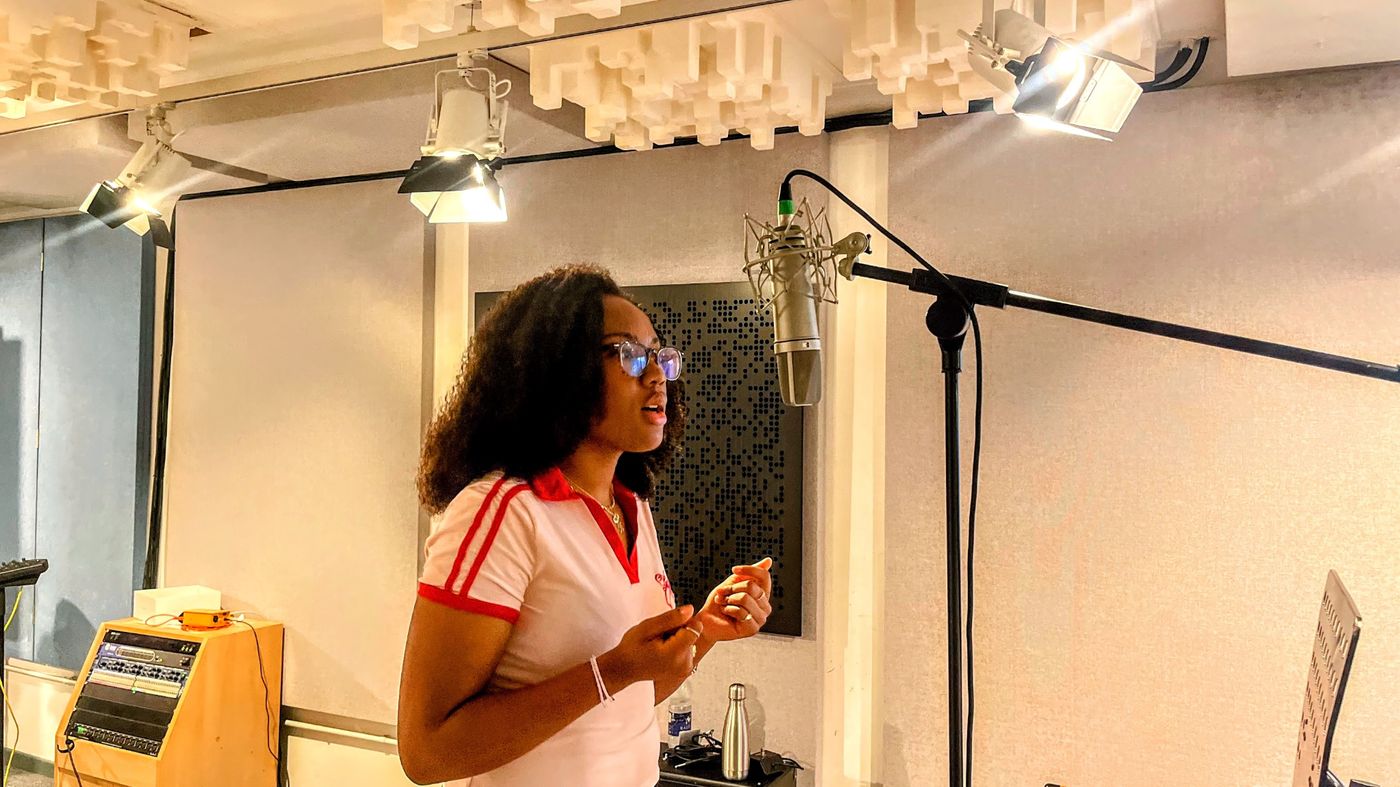
Fig 20: Neumann U87 mounted upside down and positioned slightly above the vocalist's mouth
Before we even rolled tape, while Rachel was at the mic making mock noises and clicks to test her levels, I noticed excessive mouth noise. I instantly knew she was dehydrated and called a pause to get her to drink more water. It is a small detail, but catching dehydration early saves hours of tedious de-clicking in post-production.
Rachel was incredibly professional and went through a solid warm-up routine before diving in. However, recording your own song for the first time carries a lot of weight. During playback of her initial takes, she seemed noticeably displeased with the results. As an engineer, my job is to listen objectively: she was perfectly in time and perfectly in tune. The technical execution was flawless.
I realized she wasn't missing the notes; she was overthinking the performance. I stepped in and suggested that what she was actually missing was the "Curiosity of Mr. Bean" (referencing the specific vibe of the track). Sometimes, you have to remind a singer of their own original vision to help them get out of their head. As we continued running repeats, you could hear her start to find her sound. It was a meticulous process—she did multiple takes of several sections to ensure we captured the perfect emotional arc.
The Reality of Studio Time Because we took the necessary time to let her explore and find that perfect lead vocal, the only drawback was running out of time for ad-libs. We captured a few, but Rachel understandably wanted more layers to thicken the arrangement.
With her leaving the university for the summer, our in-person studio schedule had effectively maxed out. To finish the production, we transitioned into a remote workflow. Rachel recorded the remaining ad-libs at her home setup, and the producer, Spencer, tracked the final guitar layers at his place, sending the stems over to me remotely.
Day 4: DOOR
On this day there was no one else in the studio except me, as the song is inspired from Mr. Bean Rachel wanted me to record/ sample the signature Mr. Bean door slam. I headed to Studio 2 to utilize its heavy, acoustically treated doors. To capture the perfect mechanical clunk and natural room decay, I placed an AKG 414 mic just outside the studio door. I made mic height and proximity changes based on the amount of door squeak and slam sound recorded. You can hear the door slam at the end of the song.
References
AEA Ribbon Mics (2018) What is the Blumlein technique? 4 February. Available at: https://aearibbonmics.com/what-is-blumlein-technique/ (Accessed: 25 April 2026).
Blomqvist, P. (2010) Stereo microphone techniques in drum recording. Bachelor’s thesis. Luleå University of Technology. Available at: https://www.diva-portal.org/smash/record.jsf?pid=diva2:1025450 (Accessed: 25 April 2026).
Brinck, B. (n.d.) 'How to mic a kick (bass) drum', DPA Microphones. Available at: https://www.dpamicrophones.com/mic-university/how-to-mic/how-to-mic-a-kick-drum/ (Accessed: 14 July 2026).
Brixen, E.B. (n.d.) Stereo recording techniques and setups. DPA Microphones. Available at: https://www.dpamicrophones.com/mic-university/audio-production/stereo-recording-techniques-and-setups/ (Accessed: 25 April 2026).
Gasson, J. (n.d.) Drum miking techniques. Third Circle Recordings. Available at: https://thirdcirclerecordings.co.uk/recording-blog/drum-miking-techniques/ (Accessed: 25 April 2026).
Hejia, T. (n.d.) Visualization of XY stereo microphone system (90°). Sengpiel Audio. Available at: https://sengpielaudio.com/Visualization-XY90-E.htm (Accessed: 25 April 2026).
Hirst, J. (2015) Drum recording techniques. Miloco Studios. Available at: https://milocostudios.com/toptip/drum-recording-techniques-by-joe-hirst/ (Accessed: 25 April 2026).
Houghton, M. (2020) 'Introduction to Mid-Sides recording', Sound on Sound, March. Available at: https://www.soundonsound.com/techniques/introduction-mid-sides-recording (Accessed: 25 April 2026).
Huber, D.M., Runstein, R.E. and Audio Engineering Society (2018) Modern recording techniques. New York: Routledge.
Inside Blackbird (2023) How to mic a grand piano for your next recording session. YouTube, 16 February. Available at: https://www.youtube.com/watch?v=ihT36vkalIk (Accessed: 25 April 2026).
Keller, D. (n.d.) Mid/Side (MS) mic recording basics. Universal Audio. Available at: https://www.uaudio.com/blogs/ua/mid-side-mic-recording (Accessed: 25 April 2026).
Mathews, K. (2022) Mid-Side stereo technique: demonstration & explanation. Audio University. Available at: https://audiouniversityonline.com/mid-side-mic-technique/ (Accessed: 25 April 2026).
Pedersen, K. and Grimshaw-Aagaard, M. (2018) The recording, mixing, and mastering reference handbook. Oxford: Oxford University Press.
Robjohns, H. (1999) 'Recording brass & reeds', Sound on Sound. Available at: https://www.soundonsound.com/techniques/recording-brass-reeds (Accessed: 14 July 2026).
Robjohns, H. (2003) 'Recording drums: a practical guide', Sound on Sound, February. Available at: https://www.soundonsound.com/techniques/recording-drums (Accessed: 25 April 2026).
Robjohns, H. and White, P. (2004) 'Recording violin & piano', Sound on Sound. Available at: https://www.soundonsound.com/techniques/recording-violin-piano (Accessed: 14 July 2026).
RØDE Microphones (2018) Stereo microphone techniques. Available at: https://rode.com/en-gb/about/news-info/stereo-microphone-techniques (Accessed: 25 April 2026).
Rumsey, F. and McCormick, T. (2014) Sound and recording: Applications and theory. Oxford: Taylor & Francis Group.
Sengpiel, E. (1997) Well-known stereo microphone systems and their angles. Available at: https://sengpielaudio.com/WellknownStereoMicrophoneSystemsAndTheirAngles.pdf (Accessed: 25 April 2026).
Shure (2026) 'How to mic a snare drum with a Shure SM57', Shure Insights, 25 June. Available at: https://www.shure.com/en-GB/insights/how-to-mic-a-snare-drum-with-a-shure-sm57 (Accessed: 16 August 2026).
Wikipedia (n.d.) 'Blumlein pair', Wikipedia, The Free Encyclopedia. Available at: https://en.wikipedia.org/wiki/Blumlein_pair (Accessed: 16 August 2026).